

BEFORE YOU BEGINRound Robin is an account-wide setting. The algorithm you pick here applies to every distribution rule and relay pod tied to your organization.
How Balanced Round Robin works
Every rep in a Round Robin queue carries an internally calculated Level, a score for where they stand relative to everyone else in the cycle. Balanced Round Robin reads that Level before each assignment and routes the meeting to the rep who is furthest behind. When a rep pulls ahead, Balanced temporarily holds them out of the queue until the rest of the team catches up, keeping the gap between the busiest and quietest rep small. This is the one thing that separates Balanced from Strict and Flexible: it assigns by current workload rather than a fixed cycle order or the first available slot. The result is even distribution by real workload, without anyone managing the queue by hand.Choose Balanced Round Robin
Step 1: Open Distribution settings
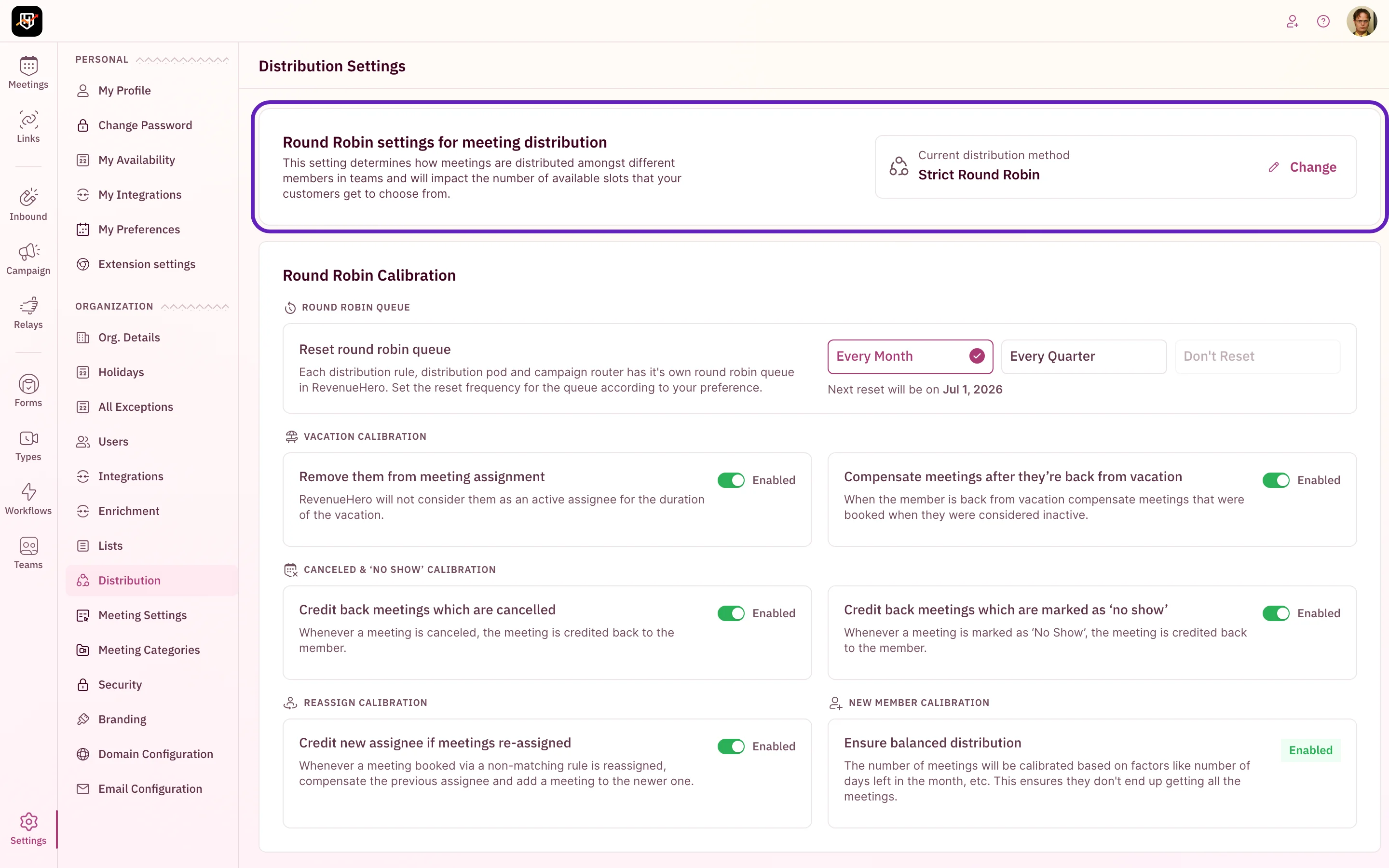
- In the left sidebar, click Settings → Distribution.
- On the Round Robin settings for meeting distribution card, click Change.
Step 2: Select Balanced Round Robin
The Round Robin picker shows all three algorithms side by side with a short diagram of how each assigns meetings. Pick Balanced Round Robin from the Select distribution method dropdown, then click Save.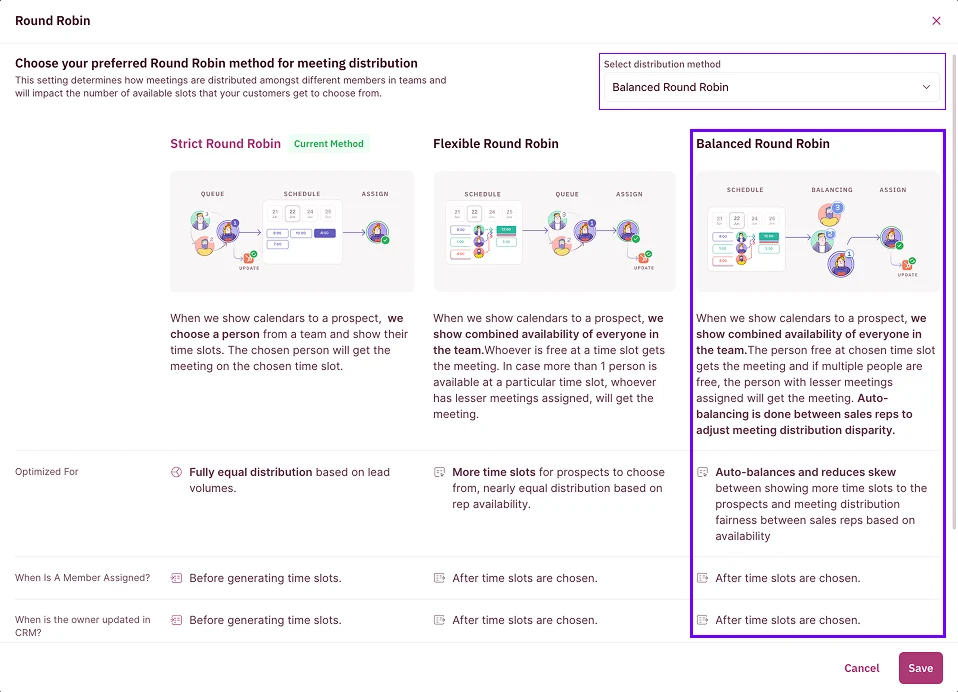
How Balanced Round Robin reads weightage
Balanced Round Robin still respects the weightage you set on a distribution rule. Weightage is the ratio of meetings a rep should receive relative to the rest of the team. A senior rep set to a higher weightage takes proportionally more meetings, and Balanced Round Robin balances the queue around that target rather than around a flat split. This is how teams run a deliberate 3:1 or 5:1 distribution while still keeping the load balanced around that ratio. You set per-member weightage when you build the distribution rule. See Create a Distribution Rule.When a rep stops getting meetings
If one rep goes quiet for a stretch while everyone else keeps booking, the usual cause is a credit adjustment that pushed their Level out of balance, not a bug. A single manual credit, or a run of cancellations, can move a rep far enough down the queue that they wait a long time for the next meeting. You can correct this from Round Robin History: hover next to the rep’s Level, then add or remove credits to nudge them back into rotation. Adding a credit puts the rep in a deficit so they get meetings sooner; removing a credit does the opposite.Balanced vs Strict vs Flexible
For a full breakdown of when to choose each, see Round Robin methods.
Balanced Round Robin is set. Your meetings now distribute by real workload, so no rep gets buried while others sit idle. 🎉🎉🎉
Round Robin methods
Compare Strict, Flexible, and Balanced and pick the right one.
Round Robin History
See where every rep stands and credit meetings back manually.
Create a Distribution Rule
Build the routing logic and set per-member weightage.
Calibrations
Control how vacations, no-shows, and reassignments affect the queue.